
By Kerry Frank
November 11, 2025

Aviation is a heavily regulated industry, and one that, I learned quickly, doesn’t exactly welcome change. In fact, it often attracts people who are wired to avoid it.
I can’t tell you how many times I sat in boardrooms and heard the same phrase:
“If it’s not broken, don’t fix it.”
It was their mantra. One rooted in safety, not laziness. In aviation, the wrong change can have life-or-death consequences. But when you’re an innovator, you have to find the fine line between caution and progress, and convince others to walk it with you.
Finding the Change-Makers
When I first started, I knew I was stepping into a world that didn’t want what I was offering. Not yet anyway. But I also knew there were change-makers inside every airline, people who saw what was possible before the rest of the industry did.
If I hadn’t shown up when I did, I truly believe those same people would have built their own version of what became the digital flight bag. The difference is, I started before there were even tablets on the market. No iPhones. No iPads. Not even Dropbox or a way to email large files efficiently.
And still, I thought, I can figure this out.
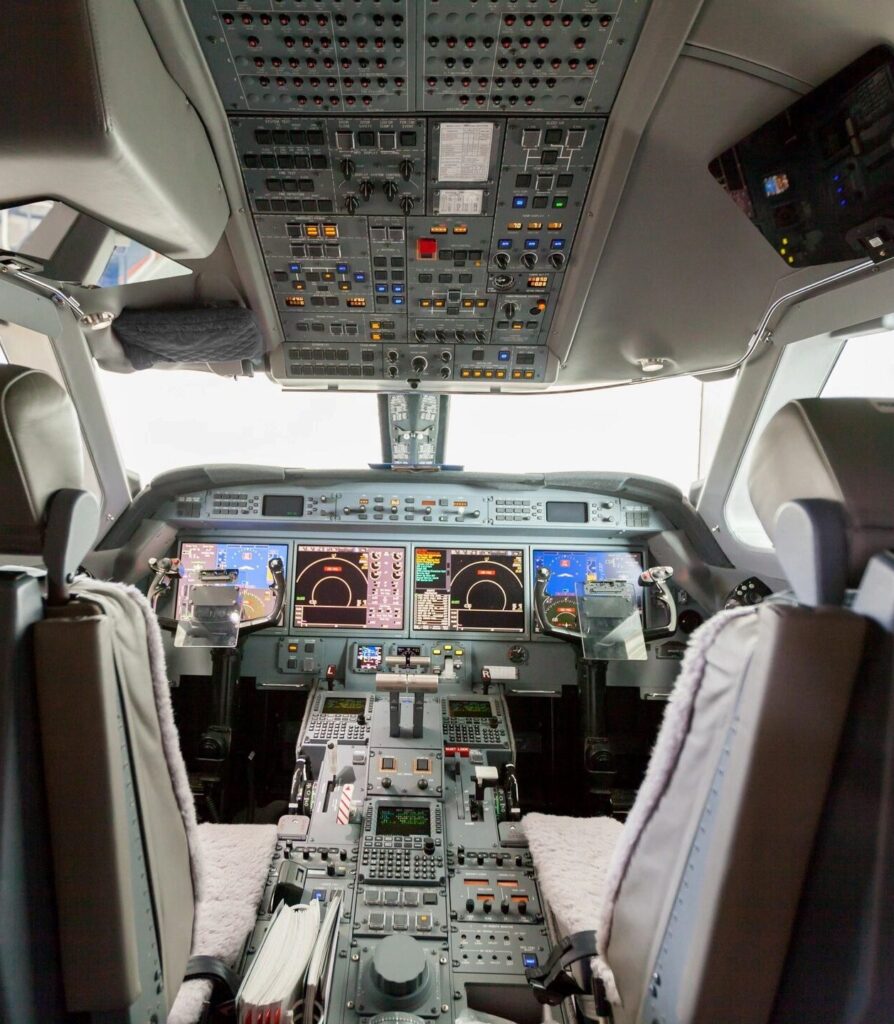
Thankfully, I didn’t have to build the tablets themselves (because that would’ve been a disaster!). While Apple, Samsung, and Amazon were busy creating the devices, I was in my basement building the backend software that would power them. The system that could securely push flight manuals, charts, and safety updates to the cockpit in real time.
That collision of innovation brought us all together: the device manufacturers, the change-makers inside the airlines, and me, the outsider with a wild idea and a whole lot of grit.
Building a Coalition for Change
My greatest strength was reading people, and understanding who in the room had perseverance and tenacity that matched my own. Those were the people I built with. Together, we formed a coalition of problem-solvers: airline leaders, regulators, and tech partners who were all willing to challenge “the way it’s always been.”
We worked with the FAA in the U.S., the CAA in the U.K., and the JAA in Europe to modernize decades old regulations that had never imagined a digital cockpit.
But let’s be honest, convincing regulators to join the team wasn’t easy. I’m not sure the FAA ever really wanted to be on the team. Change doesn’t happen because regulators suddenly get inspired; it happens because industry momentum becomes too strong to ignore.
When nine airlines start pushing the same idea, and more are lining up behind them, regulators eventually have to stop asking, “Why change?” and start asking, “Why not?”
The Outsider’s Advantage
The power of having an outsider on a digital transformation team is simple. Outsiders ask why.
When you’ve been inside an industry long enough, you tend to digitize old habits instead of redesigning them. People take the same paper process, move it onto a screen, and call it “innovation.”
But real transformation asks tougher questions:
Why do we do it this way?
What if there’s a better path entirely?
Defining Digital Transformation
“Digital transformation” isn’t just adding new technology to your workflow.
It’s using technology to fundamentally change how a business operates, delivers value, and interacts with its people.
It means rethinking everything. The process, the culture, and the strategy. And that’s exactly what we were doing, even if we didn’t have the vocabulary for it back then.

The Moment That Changed Everything
One of my favorite memories was the day Republic Airlines and I met with the FAA to prove that digital flight bags weren’t just efficient, they were safer.
I was explaining how instant access to procedures could literally save lives in emergencies when one of the regulators threw his watch on the table and said,
“Prove it.”
Challenge accepted.
I handed him a 1,300-page paper manual and opened my tablet. A pilot said, “Find emergency procedures for a cracked windshield.”
Within seconds, I had it pulled up on my screen, bookmarked, highlighted, and ready. The FAA regulator was still flipping through his paper binder, trying to find the section.
When he finally did, the room went quiet.
That moment changed everything. They saw it. The speed. The precision. The potential to save time. And lives.
Collaboration Over Competition
Change at that level doesn’t happen in silos. It happens when competitors set egos aside and work together for the good of the industry.
For the first time, airlines that normally guarded information were collaborating on a shared vision. Technical Publications, Pilots, Flight Attendants, and IT departments, teams that rarely sat at the same table, were suddenly building something together. And in that process, we didn’t just digitize aviation. We standardized it.
Without that collaboration, I don’t think the industry would have achieved unified Electronic Flight Bag (EFB) practices as quickly or as effectively as it did.
Disruption in aviation didn’t happen because of one piece of software. It happened because of a group of people, insiders, outsiders, and regulators, who were brave enough to question the status quo. And maybe, just maybe, because one woman in her basement kept asking the most uncomfortable question in any boardroom:
“Why do we do it that way?”
Innovation doesn’t start with answers. It starts with the courage to keep asking why, even when the room goes silent.
With Gratitude,
~ Kerry
I’d love to hear what resonated most with you. Feel free to comment below.
Your support matters. Follow, share, or invite a friend to join this community of grit, faith, and legacy. Together, we’re writing the next chapter.